If you’ve been looking into affiliate marketing, you’ve probably heard the same advice repeated over and over: “Build a website. Start a blog. Create content. Wait for Google to find you.”
That’s solid advice, eventually. But for a complete beginner, building and ranking a website can feel like trying to climb a mountain before you’ve learned to walk.
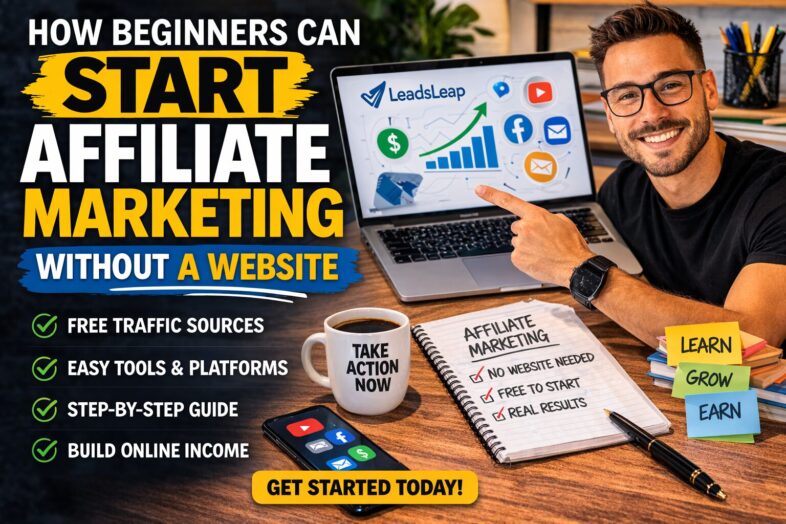
Here’s what most people don’t tell you: you don’t need a website to start affiliate marketing.
You can start learning the basics, driving traffic, and promoting affiliate offers right now using tools and platforms that are either free or very low-cost like LeadsLeap. This article will walk you through exactly how to do that in a way that’s practical, honest, and beginner-friendly.
No hype. No “six figures by next month” promises. Just a clear starting path.
The Problem Beginners Face
Most beginners get stuck in one of two places.
The first is information overload. You search “how to start affiliate marketing,” and suddenly you’re drowning in YouTube videos, Reddit threads, paid courses, and blog posts all contradicting each other. Some say you need a niche site. Others say social media is the only way. Someone else says email is king. It becomes paralyzing.
The second is the technical barrier. Setting up a WordPress site, buying a domain, configuring hosting, installing plugins, for someone who’s never done it before, that list can feel overwhelming before you’ve even picked an affiliate product to promote.
The result? Most beginners spend weeks “getting ready” and never actually start.
The truth is that you don’t need everything set up perfectly before you take action. You need a simple starting point, a real offer to promote, and a way to get eyeballs on it. That’s it. To get started with affiliate marketing without a website is fairly easy with the right tools, as you will see if you keep reading.
The Simple Strategy
Affiliate marketing at its core is straightforward. You find a product or service someone else has created, get a unique tracking link, share that link with people who might want it, and earn a commission when someone buys through your link.
That’s the whole model.
You don’t have to create the product, handle customer service, or need any inventory. Your only job is to connect the right offer with the right audience.
Without a website, that connection happens through other channels: content platforms, simple landing pages, email lists, and paid or free advertising platforms. Each of these can carry your affiliate link to real people without requiring you to build or maintain a full website.
Step-by-Step Guide
Step 1: Choose a Beginner-Friendly Affiliate Program
Start with programs that are easy to join and don’t require an existing audience to get approved. Some good starting points include:
- ClickBank: A large digital product marketplace with high commission rates.
- DigiStore24: Similar to ClickBank, popular for digital products.
- Amazon Associates: Low commissions but enormous product selection.
- LeadsLeap: A traffic and marketing platform with its own affiliate program that pays recurring commissions.
Look for products that solve a real problem and have clear, honest sales pages. Avoid anything that looks spammy or makes unrealistic promises, because that reflects on you as the person sharing the link.
Step 2: Set Up a Simple Landing Page
A landing page is a single web page with one job: to collect an email address or warm up a visitor before they see an affiliate offer.
You don’t need a full website to have a landing page. Tools like LeadsLeap, GetResponse, and Systeme.io let you build simple, functional landing pages for free or at low cost.
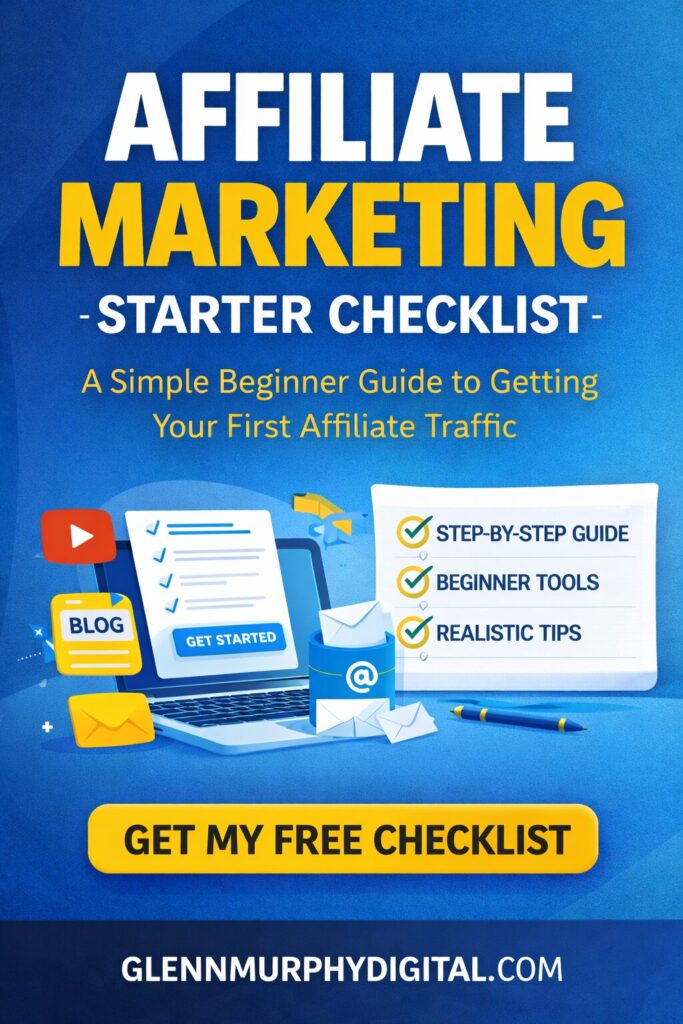
>>>CLICK THE IMAGE ABOVE TO DOWNLOAD THIS FREE CHECKLIST<<<
A good beginner landing page might simply say: “Want to learn how to start earning with affiliate marketing? Get my free beginner checklist.” The visitor enters their email, and you follow up with helpful content and your affiliate recommendations.
Step 3: Build Even a Small Email List
Email is one of the most valuable assets in affiliate marketing. When someone gives you their email address, you have a direct line to them that doesn’t depend on any algorithm.
Even a list of 50 to 100 engaged subscribers is more valuable than thousands of social media followers who never see your posts.
Use your landing page to capture emails. Then send useful, non-pushy emails that help your subscribers with their goals. Over time, you’ll recommend relevant products naturally within that helpful content.
Step 4: Start Driving Traffic
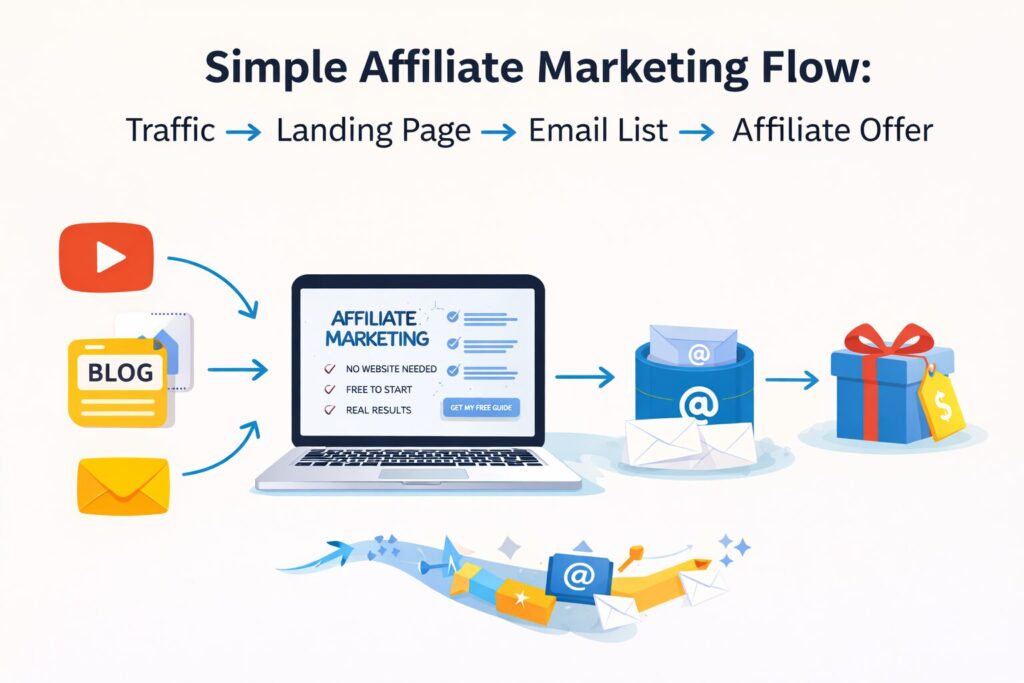
Traffic is the lifeblood of affiliate marketing. Without people seeing your link or landing page, nothing happens. Here are four beginner-friendly traffic sources that don’t require a website:
Content Platforms:
Sites like Medium, Vocal Media, and even LinkedIn Articles let you publish content for free. Write helpful, informative posts related to your niche and include your landing page link or affiliate link where appropriate. These platforms already have built-in audiences and can send traffic to your offers.
YouTube:
You don’t need to be a polished content creator. Simple screen-share videos, tutorials, or honest product reviews can attract real viewers over time. YouTube is the second-largest search engine in the world, and a helpful video with your affiliate link in the description can earn clicks for years.
Online Communities and Forums:
Reddit, Quora, and niche Facebook groups are full of people asking questions about problems your affiliate products can solve. Answer questions genuinely and helpfully. Build a reputation first. Dropping links without contributing real value will get you ignored or banned.
LeadsLeap:
LeadsLeap is an advertising platform designed specifically for online marketers. It allows you to run ads to a real community of people interested in online income, marketing tools, and digital products. It has both free and paid membership options, making it accessible for beginners. You can advertise your landing page, build your list, and promote affiliate offers all within one platform. It also has a solid affiliate program of its own if you want to promote it as a product.
Beginner-Friendly Tools and Platforms
Here’s a short list of tools that can help you get started in affiliate marketing without a website:
LeadsLeap: Landing pages, list building, ad traffic, and an affiliate program in one place. A strong starting point for beginners.
Systeme.io: Free plan includes landing pages, email marketing, and basic funnels. One of the most beginner-friendly all-in-one tools available.
GetResponse: Email marketing platform with a free tier and landing page builder. Good if you want to focus on list building from day one.
Medium: Free content platform where you can publish articles and drive traffic to your landing page or affiliate offers.
ClickBank or DigiStore24: Marketplaces to find affiliate products to promote. Both are beginner-friendly and free to join.
Canva: Free graphic design tool to create simple images for your content or social media posts.
None of these tools requires technical expertise to get started. Most have tutorials built right into the platform.
Realistic Expectations
Let’s be honest about something: affiliate marketing is not a fast path to income.
Most people who stick with it and see results are working consistently for three to six months or longer before they earn anything significant. Some earn their first commission in a few weeks. Others take longer. It depends on how much time you put in, how well you understand your audience, and how willing you are to test and adjust your approach.
What separates people who eventually succeed from those who give up is simple:
They keep going past the point where it feels like nothing is working.
Here’s what realistic progress might look like for a beginner:
Month 1: Learning the basics, setting up a landing page, choosing an offer, and publishing your first pieces of content or running your first small ad campaign.
Months 2 to 3: Starting to see small amounts of traffic and possibly your first email subscribers. Maybe your first click or two on an affiliate link.
Months 3 to 6: Refining your approach based on what’s working, growing your email list, and potentially earning your first commissions.
This is not a sprint. It’s a process. Treat it like learning a skill, because that’s exactly what it is.
Key Takeaways
You don’t need a website to start affiliate marketing. Content platforms, landing pages, email lists, and ad platforms can replace a website while you’re learning.
Start simple. Pick one affiliate program, one traffic source, and one way to capture leads. Don’t try to do everything at once.
Build an email list from day one. It’s the most reliable asset you can build in affiliate marketing.
LeadsLeap is a beginner-friendly platform that combines traffic, list building, and an affiliate program in one place.
Realistic expectations matter. Most people see results in three to six months of consistent effort, not three to six days.
Free and low-cost tools like Systeme.io, Medium, and GetResponse make it possible to start with very little money.
Content and consistency win over time. One helpful article or video can send traffic for months or years.
Ready to Keep Learning?
If this article helped you see that getting started is more within reach than you thought, that’s exactly the point.
GlennMurphyDigital.com is built for beginners who want straight answers, practical strategies, and honest guidance, no hype, no inflated promises.
Explore the site for more articles on beginner traffic strategies, affiliate marketing basics, and the tools that can help you build a simple, sustainable online income on your own terms.
Want to know more? Click this START HERE Link NOW!